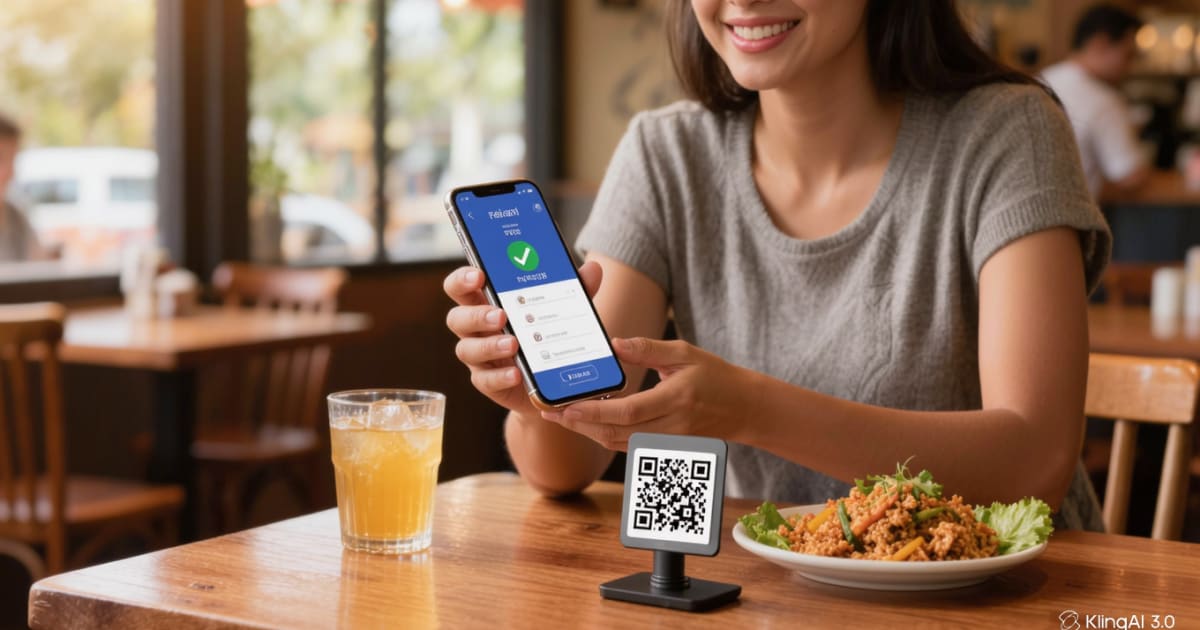
More Filipino diners are paying with GCash than ever before. Find out why restaurants accepting GCash payment are winning more customers — and how your restaurant can get set up fast.
Walk into any bustling restaurant in Manila, Cebu, or Davao today and you'll notice something: diners are reaching for their phones to pay. Not to swipe a card, not to hand over cash — but to open GCash and scan a QR code. The shift to cashless dining is happening fast in the Philippines, and restaurants accepting GCash payment are at the front of that wave.
Why GCash Has Become the Go-To Payment for Filipino Diners
GCash has grown into one of the most widely used financial apps in the Philippines, with tens of millions of registered users across the country. For many Filipinos, it's become their primary wallet — they use it to pay bills, send money, buy load, and shop online. It was only a matter of time before it became their preferred way to pay at restaurants too.
The appeal is simple: no need to carry cash, no waiting for change, no worrying about worn-out bills. Just scan, confirm, and done. For younger diners especially — students, young professionals, and families — GCash payment at a restaurant feels as natural as ordering through a QR menu.
What Restaurant Owners Gain by Accepting GCash
Faster checkout. Cash transactions slow down table turnover. Counting change, waiting for the exact amount, handling receipts — it all adds up. With GCash, payment is completed in seconds, freeing up your staff to focus on the next table.
Fewer cash-handling risks. Managing a cash float, reconciling the till at the end of the night, and the ever-present risk of theft or counting errors are real headaches for restaurant operators. Going cashless reduces all of these pain points significantly.
More customers through the door. Some diners — especially younger ones — actively choose where to eat based on whether a restaurant accepts GCash. If your competitor across the street accepts it and you don't, you may be losing customers without even knowing it.
Easier sales tracking. Every GCash transaction is automatically recorded digitally. This makes end-of-day reconciliation faster and gives you a cleaner picture of your daily sales without relying on manual tallies.
Promotions and cashback. GCash frequently runs promotions with partner merchants — cashback deals, discounts, and loyalty rewards. Being a GCash-accepting restaurant makes you eligible for these campaigns, which can drive new customers to your door at no extra cost to you.
Common Concerns Restaurant Owners Have — Answered
"What if the internet is slow?" GCash transactions require a stable connection, but most restaurants in urban and suburban areas in the Philippines have reliable enough connectivity. Keeping a backup mobile data hotspot is a simple safeguard.
"Does it cost money to accept GCash?" Registering as a GCash merchant is free. Some transaction fees may apply depending on your setup, but for most small and mid-sized restaurants, the cost is minimal compared to the convenience offered.
"What about older customers who don't use GCash?" You don't have to go fully cashless. Most successful restaurants in the Philippines use GCash as an additional payment option alongside cash. It's a "yes, and" — not an "either/or."
How to Start Accepting GCash at Your Restaurant
Getting set up as a GCash merchant is straightforward. Here's the basic process:
- Register your business as a GCash merchant through the GCash app or their merchant portal
- Get your unique merchant QR code
- Print and display your QR code at the counter or on each table
- Train your staff to verify GCash payment confirmations
Once you're set up, the process is seamless. Customers scan your QR code, enter the amount, and confirm. You receive an instant notification of the payment. No card terminals, no extra hardware required.
If you want to take it a step further and combine GCash payment with a full digital ordering experience — including QR table menus, order management, and sales tracking — Smapey Restaurant is built exactly for that. It's a simple, affordable tool designed for Philippine restaurant owners who want to modernize their operations without the complexity of big enterprise systems.
The Bigger Picture: Cashless Dining Is the New Normal
The Philippines is one of the fastest-growing cashless economies in Southeast Asia. Government initiatives, the rise of digital wallets like GCash and Maya, and changing consumer habits are all pushing dining toward a cashless future. Restaurants that adapt now will be better positioned to serve the next generation of Filipino diners.
Whether you run a small turo-turo, a café, or a full sit-down restaurant, accepting GCash payment is one of the easiest and most impactful upgrades you can make today. It costs almost nothing to set up, it speeds up service, and it signals to customers that your restaurant is modern and customer-friendly.
Ready to bring your restaurant into the cashless era? Check out Smapey Restaurant to see how you can manage QR ordering and payments all in one place — built for Philippine restaurants, by people who understand the local market.
Rodrigo Bantilan
Community contributor · Published June 4, 2026