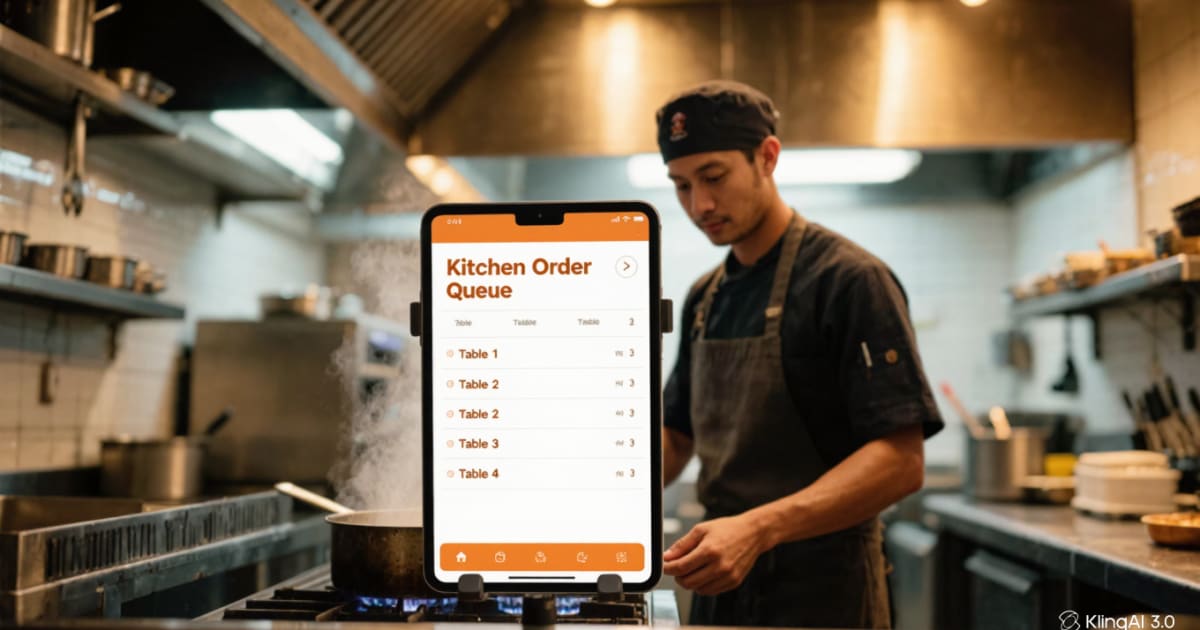
An online food ordering system paired with a kitchen order queue manager can transform how your restaurant handles rush hours — fewer missed orders, faster service, and a calmer kitchen crew.
Picture this: it's a Sunday lunch rush at your restaurant. Orders are coming in fast — from tables, from walk-ins, maybe even from online. Your waitstaff is scrambling, the kitchen is shouting, and somewhere in the chaos, two orders get mixed up. A customer waits 40 minutes for the wrong dish. Sound familiar? This is exactly the problem that an online food ordering system with a kitchen order queue manager is designed to solve.
What Is an Online Food Ordering System?
An online food ordering system lets customers place their orders digitally — through a QR code on the table, a web link, or a tablet at the counter — instead of telling a waiter verbally. The order is instantly captured in the system, timestamped, and sent directly to the kitchen. No paper tickets, no shouted orders, no lost slips.
When this is paired with a kitchen order queue manager — sometimes called a Kitchen Display System or KDS — every order appears on a screen in the kitchen in the exact sequence it was received. Cooks can see what needs to be prepared, in what order, and mark items as done when ready. The result is a kitchen that runs like clockwork even during the busiest hours.
Why Philippine Restaurants Need This Now
The Philippine restaurant industry is one of the most competitive in Southeast Asia. Whether you're running a small carinderia in Quezon City, a family restaurant in Pampanga, or a café in BGC, you're dealing with the same universal challenge: how to serve more customers faster without sacrificing quality or burning out your staff.
Most restaurants in the Philippines still rely on handwritten order slips or verbal communication between floor staff and the kitchen. This works when you're serving 10 tables. It breaks down at 30. An online food ordering system eliminates the bottleneck entirely by automating the flow of orders from customer to kitchen.
How the Kitchen Order Queue Manager Changes Everything
No more lost orders. Every order placed through the system appears instantly on the kitchen display. Nothing gets forgotten, nothing gets buried under a pile of paper tickets.
Orders served in the right sequence. The queue manager prioritizes orders by time received. The kitchen always knows what to cook first, reducing wait times and keeping customers happy.
Staff work smarter, not harder. Waitstaff no longer need to run back and forth between tables and the kitchen to relay order updates. The system does it automatically, freeing your team to focus on hospitality.
Fewer errors, fewer complaints. When orders are typed by the customer or waitstaff directly into the system, miscommunication drops dramatically. The kitchen gets exactly what was ordered — nothing more, nothing less.
Real-time visibility for managers. Restaurant owners and managers can see all active orders, track preparation times, and identify bottlenecks without stepping foot in the kitchen. This is especially valuable for multi-table or multi-branch operations.
The Customer Experience Upgrade
It's not just the kitchen that benefits — your customers notice the difference too. When orders arrive faster and accurately, satisfaction goes up. When customers can browse a digital menu at their own pace and place orders without flagging down a server, the dining experience feels more relaxed and modern.
In a market where Filipino diners are increasingly tech-comfortable — they use GCash, they book through apps, they scan QR codes daily — a restaurant with a smooth digital ordering experience stands out from the competition.
What to Look for in a Food Ordering System for Your Restaurant
Not all systems are created equal. Here's what matters most for Philippine restaurant owners:
- QR table ordering — customers scan and order from their phone, no app download needed
- Kitchen display / order queue — orders appear on a screen in the kitchen in real time
- Easy menu management — update items, prices, and availability without technical help
- GCash and cashless payment support — essential for modern Filipino diners
- Simple setup — you shouldn't need an IT team to get started
- Affordable pricing — built for small and mid-sized restaurants, not big chains
If you're looking for a system that checks all these boxes and is designed specifically for Philippine restaurants, Smapey Restaurant is built exactly for this. It combines QR table ordering, a kitchen order queue display, and payment management in one simple platform — no complicated setup, no enterprise pricing.
Getting Started Is Easier Than You Think
Many restaurant owners assume that adopting a food ordering system requires a big investment or a technical team. The reality is that modern systems like Smapey are designed to be set up in a single afternoon. Print your QR codes, set up your menu, connect your kitchen display, and you're live.
The return on that investment shows up quickly — in fewer order errors, faster table turnover, and a less stressed kitchen team. For a restaurant serving 50 or more covers a day, even shaving five minutes off average order-to-serve time adds up to a significant difference in revenue and customer satisfaction.
The Bottom Line
The Philippine restaurant scene is evolving fast. Customers expect speed, accuracy, and convenience. The restaurants that thrive in the next few years will be the ones that modernize their operations today — not tomorrow.
An online food ordering system with a kitchen order queue manager isn't a luxury for big chains anymore. It's an affordable, practical tool that any restaurant in the Philippines can use right now. Try Smapey Restaurant and see how much smoother your operations can run — from the first order to the last plate served.
Nestor Calibugan
Community contributor · Published June 4, 2026